


Police Discover Dead Daughter Beneath Unconscious Parents: A Late-Night Call Uncovers a Family Tragedy
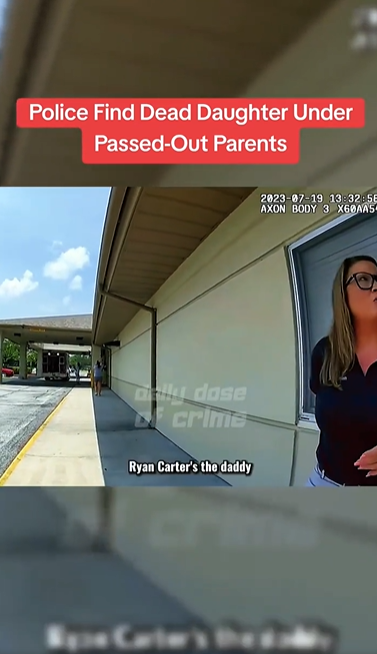
OHIO, USA — A late-night emergency call brought police to a seemingly quiet home on the outskirts of Dayton, Ohio. But when officers stepped inside, they quickly realized this was far more than a routine welfare check. Two adults were found unconscious inside the residence, and in a location no officer expected to find anyone, police discovered the body of a young woman. Body-camera footage captured the officers as they entered the home, assessed the people inside and gradually realized the seriousness of what had happened. What makes the incident particularly disturbing is that, when officers first arrived, they had no idea they were about to uncover a family tragedy of such magnitude.
Note: The names, specific location and time references in this article are fictionalized for storytelling purposes. The sequence of events is based on the situation depicted in the video and should not be considered a verified police report or court record.
The Call That Came in the Middle of the Night
At approximately 2:17 a.m. on a late September morning, emergency dispatchers in Dayton, Ohio, received a call requesting police assistance at a home in a quiet residential neighborhood on the eastern side of the city. The caller, described as an acquaintance of the family, reportedly said that repeated attempts to contact the people inside the house had gone unanswered. No one was answering the door. No one was responding to calls. More troubling was the caller’s belief that people were inside the residence and that something was not right. Officers were immediately dispatched to the address. At that moment, they had no idea what they were about to encounter. A welfare check can sometimes end within minutes when a resident opens the door and explains that everything is fine. But that night would be very different.
The House Was Unusually Quiet
When the police cruiser arrived, the neighborhood was still covered in darkness. There were no obvious signs of a struggle outside. No one was shouting for help. There was no visible activity suggesting an emergency. The house simply sat quietly among the surrounding homes. According to the body-camera footage, officers approached the front door and attempted to make contact with whoever was inside. They called out. They knocked. They waited. But there was no response. The silence became increasingly concerning. One officer informed the others that they needed to check the interior of the residence. The door was opened, and officers stepped inside. Within moments, they began to realize that this was not going to be an ordinary welfare check.
Two Adults Were Found Unconscious
Inside the home, officers discovered two adults who appeared to be unconscious. A man and a woman were found lying motionless. Officers immediately checked for signs of responsiveness. They called out to them and attempted to determine whether either person could respond. The reaction was extremely limited, if there was any response at all. An officer quickly requested medical assistance. At that moment, the officers did not know why the two adults were unconscious. It could have been a medical emergency. It could have involved a substance that affected their consciousness. Or there could have been another explanation entirely. Rather than making assumptions, officers continued searching the residence. Then they noticed something that made the situation even more disturbing.
“There’s Someone Else in the House”
While checking the rooms, officers began searching for anyone else who might be inside. They called out names, checked different areas and carefully examined the dark interior of the house. The body-camera footage shows officers moving cautiously through the residence as they tried to determine whether anyone else needed help. One officer began paying closer attention to the area where the two adults had been found. Something did not appear right. As officers looked more carefully, they discovered a third person — a young woman. But she did not respond. She did not answer their calls. She did not move. The officers quickly realized that the situation was far more serious than the original emergency call had suggested.
The Discovery That Changed Everything
According to the scenario depicted in the video, police discovered that the young woman, identified in this fictional account as 19-year-old Sarah Mitchell, was already deceased in the area directly beneath the two unconscious adults. At the time of the discovery, officers could not immediately determine exactly what had happened. One officer checked the young woman while other officers continued examining the surrounding area. The atmosphere inside the house changed instantly. Only minutes earlier, officers believed they were responding to a welfare check because someone had failed to answer calls. Now they were standing inside a home where a young woman had lost her life, while two adults were lying unconscious nearby.
The First Question: What Happened?
In a typical investigation, police can begin by questioning the people inside the home. This time, however, the two people who might have known what happened were unable to provide immediate answers. That meant officers had to rely heavily on the scene itself: the position of the people, the condition of the room, objects surrounding them and anything else that might provide a clue. Why was the young woman in that location? Why were the two adults unconscious? Did the two events happen at the same time, or were they separated by hours? Had anyone else been inside the residence before police arrived? At that moment, none of those questions had clear answers.
Medical Crews Rush to the Scene
After determining how serious the situation was, officers requested emergency medical crews. Paramedics entered the residence while police continued securing the scene. This step was critical because investigators needed to preserve the surroundings as much as possible. If the incident ultimately proved to involve a crime, moving objects or disturbing the scene could potentially affect the investigation. Medical personnel focused on the two adults who might still be able to receive treatment, while officers secured the area around the young woman. The quiet house was suddenly filled with the lights and activity of police and emergency crews. Outside, police and medical vehicles gathered along the street as a routine neighborhood suddenly became the scene of a major investigation.
No One Knew When the Tragedy Had Begun
One of the most difficult questions for investigators was determining when the events had actually started. How long had the young woman been deceased? How long had the two adults been unconscious? Who had last seen the young woman alive? And why had no one called police sooner? Those questions would become central to the investigation. In a death investigation, timing can be extremely important. A seemingly small gap of minutes or hours can sometimes help investigators establish the sequence of events. What officers saw that night was therefore only the beginning. A much larger investigation would be needed to reconstruct what happened before they arrived.
Officers Search the House for Clues
After the immediate medical response, officers continued examining the residence. Body-camera footage shows them moving through different areas of the house, carefully observing their surroundings. Every room could potentially contain a clue — an object out of place, a phone, a door, a piece of evidence or anything else that might help establish what happened before officers arrived. Investigating a scene is rarely as simple as finding one obvious piece of evidence. Much of the work involves recording small details, documenting them and later comparing them with statements, medical findings and other evidence. A single detail may not seem significant at first, but several details combined can sometimes help investigators reconstruct an entire sequence of events.
A Night the Family Would Never Forget
If the residence had once been an ordinary family home, everything changed that night. One young woman was dead. Two adults had been found unconscious. Police were securing the property while investigators began asking questions about what had happened before their arrival. Rooms that may once have been filled with the ordinary sounds of family life were suddenly silent. Every step taken by officers inside the house carried another question. And behind every question was another possibility.
What Caused the Adults to Lose Consciousness?
One of the most important questions was what caused the two adults to become unconscious. Investigators would need to determine whether their condition was directly connected to the young woman’s death. Did all three people experience the same event? Did the young woman die before the adults lost consciousness? Was a substance involved? Or was there another explanation? Those questions could not be answered simply by looking at the scene during the first few minutes. Investigators would likely need medical examinations, toxicology results, interviews and physical evidence before drawing conclusions.
The Body Cameras Captured the Officers’ Response
One of the most striking aspects of the footage is that viewers can watch officers gradually realize how serious the situation has become. At first, it is simply a welfare check. Then officers find two unconscious adults. Moments later, they discover a young woman. Finally, they realize that she is deceased. There is no single moment that explains everything. Instead, the seriousness of the situation unfolds piece by piece. That is also what makes body-camera footage so important in investigations. It can preserve not only what officers said, but also where they were, what they saw and how they responded as an uncertain situation developed in front of them.
The Final Moments of the Video
As the night continues, officers remain at the residence, working both inside and outside the property. Police lights illuminate the street while officers communicate with one another and medical personnel complete their work. The scene gradually comes under control, but the real investigation is only beginning. A young woman is dead. Two adults have been found unconscious. And inside the home, countless questions remain unanswered.
A Late-Night Call Reveals a Tragedy No One Expected
What makes the incident particularly haunting is the contrast between what the house looked like from the outside and what officers discovered inside. There were no obvious warnings from the street. No screams could be heard. No clear indication suggested that a tragedy was unfolding behind the closed doors. There was simply a quiet home and a call asking police to check on the people inside. Without that call, how much longer would it have taken for anyone to discover what had happened? That is a question investigators would also have to consider as they began reconstructing the timeline.
One House, Three People and Too Many Questions
By the end of the footage, viewers still do not have every answer. But the images make clear how serious the situation was. A young woman had lost her life. Two adults had been found unconscious. Police had entered a dark residence with limited information and were forced to piece together the situation one detail at a time. Every room had to be examined. Every clue had to be documented. Every question had to be asked. And everything began with a late-night call that initially sounded like a simple welfare check.
The Tragedy Behind a Closed Door
For neighbors, the house may have looked like any other residence on the street — a place where a family lived, returned home after work and went about their daily lives. There would have been no obvious reason for anyone outside to suspect that something terrible was happening inside. But that night, the closed door opened to a completely different reality. Tragedy does not always begin with gunshots, screams or a police chase. Sometimes it begins with silence. A phone call that goes unanswered. A door that no one opens. A dark room. And a police officer stepping across the threshold without knowing what they are about to see.
The Investigation Has Only Just Begun
In a death investigation, discovering a body is only the beginning. Investigators must determine the cause and manner of death, establish when the death occurred and reconstruct the events that happened beforehand. They must also determine why the two adults were unconscious, examine evidence from the residence and establish whether anyone else had been inside before police arrived. Any final conclusion must be supported by evidence. Body-camera footage can provide an important part of the story, but it cannot always explain the entire cause of a tragedy. That is why an investigation can continue long after the cameras stop recording.
When the Police Leave, the Questions Remain
By the end of the night, police vehicles remain outside the residence, but the most troubling part of the incident is no longer outside. It is inside the walls of the home. A family has lost a young woman. Two adults have been found unconscious. Investigators must reconstruct the events piece by piece. And it all began with a phone call in the middle of the night. The body-camera footage ends, but the investigation has only just begun. Sometimes the hardest task for police is not finding the person who is gone, but discovering the truth about everything that happened before they arrived.
One phone call. One closed door. Two unconscious adults. One young woman who was already dead — and a mystery investigators must unravel one piece at a time.